
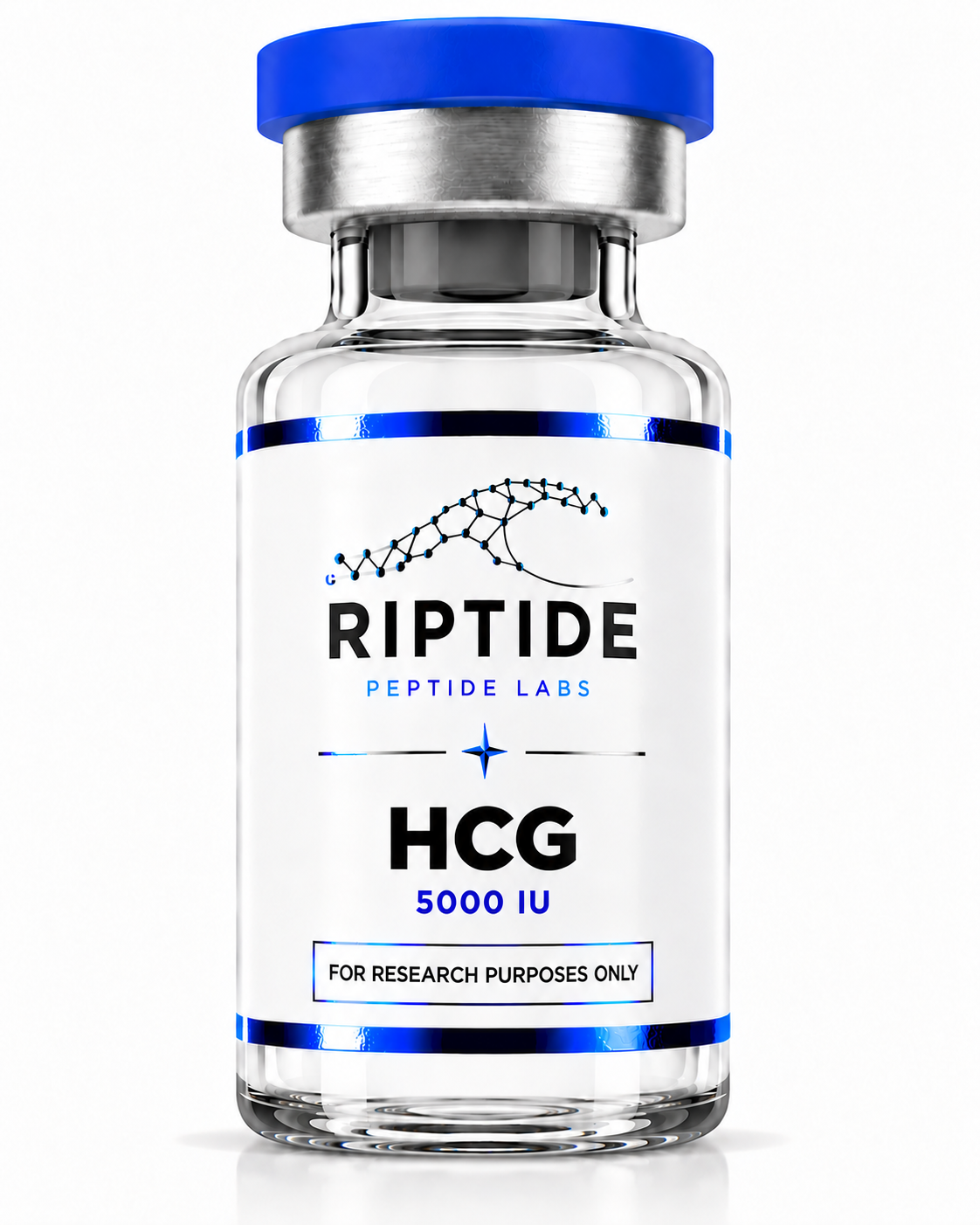
What is hCG researched for?
hCG is mainly associated with reproductive hormones and fertility. It mimics luteinizing hormone (LH), which signals the testes to produce testosterone and helps trigger ovulation in the ovaries. Researchers study these actions to understand hormone production and reproductive function.
hCG, also known as human chorionic gonadotropin, is a glycoprotein hormone studied for its interaction with the luteinizing hormone/chorionic gonadotropin receptor (LHCGR). Research has examined its role in receptor signalling and steroid hormone production in reproductive cells.
In simple terms: researchers study hCG to understand how hormone signals influence reproductive cell activity and hormone production.
This product is supplied for controlled laboratory research. Refer to the individual listing and batch documentation for the vial strength and product specifications.
Product Details
| Component | Details |
|---|---|
| Compound | hCG |
| Also known as | Human chorionic gonadotropin |
| Research category | Gonadotropin receptor and reproductive endocrinology research |
| Vial strength | As stated on the selected product listing |
What Is hCG Studied For?
Preclinical and laboratory research only
Gonadotropin receptors: Researchers investigate how hCG binds to and activates LHCGR, a receptor also activated by luteinizing hormone (LH).
Cellular signalling: Experimental studies examine signalling pathways activated following hCG exposure, including cyclic AMP (cAMP), which helps transmit hormonal signals within cells.
Steroid hormone production: Laboratory models explore how hCG influences steroidogenesis—the process by which cells produce steroid hormones—and the expression of genes involved in this process.
Reproductive cell research: Studies have investigated hCG in Leydig cells and ovarian granulosa cells to better understand hormone-responsive cell activity. Results from those studies do not establish the effects of this research-use vial.
Research Use Notice
FOR RESEARCH PURPOSES ONLY. This Riptide product is intended for laboratory research and is not offered for human or veterinary use. It is not intended for therapeutic or diagnostic purposes. Handle and store according to applicable laboratory procedures and the product’s batch documentation.

Reviews
There are no reviews yet.