
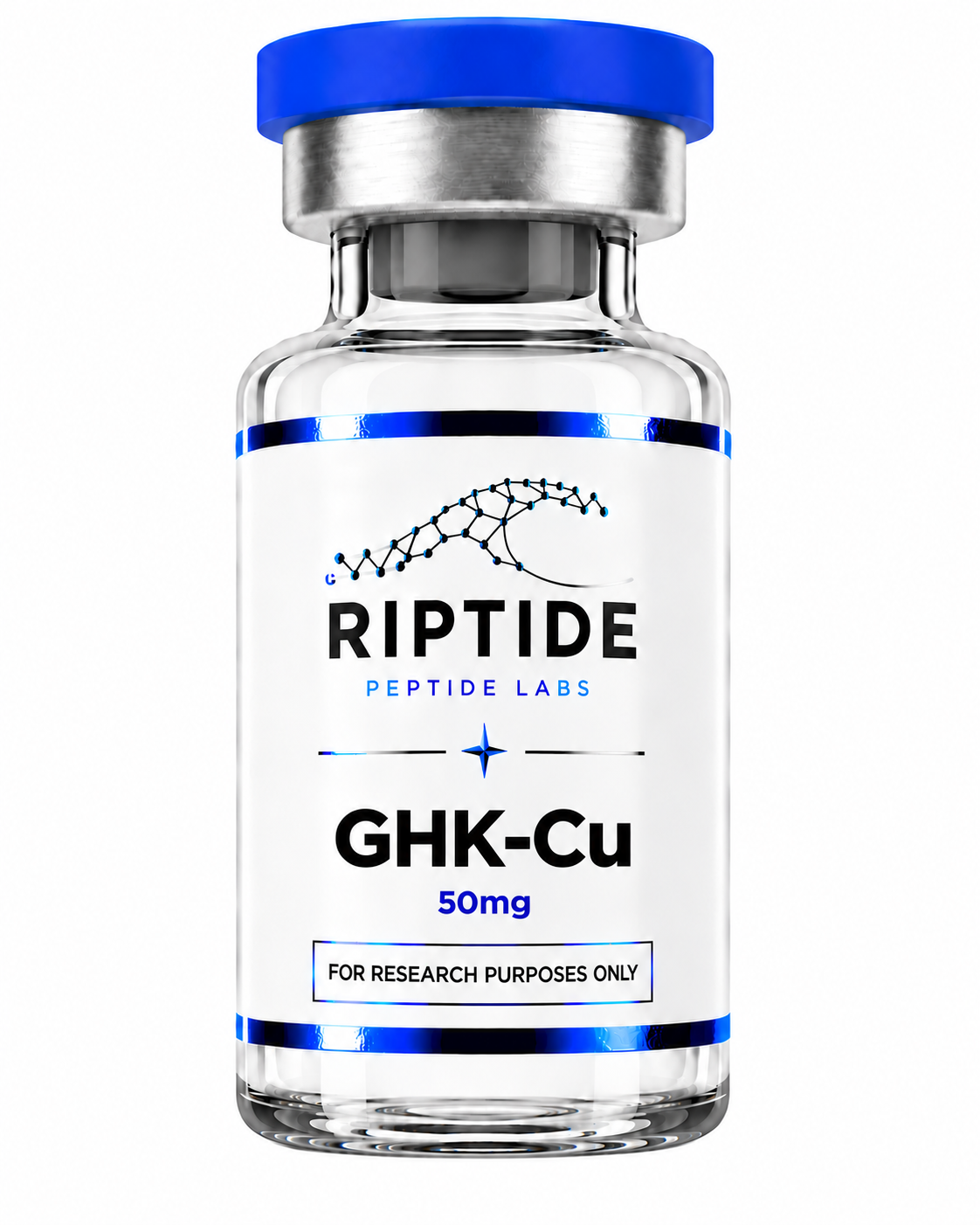
GHK-Cu is a complex formed when the tripeptide GHK (glycyl-L-histidyl-L-lysine) binds copper. It is studied in laboratory models of fibroblast activity, collagen production, and cellular responses to tissue damage.
In simple terms: GHK-Cu attracts interest for its potential effects on skin appearance, hair growth, and inflammation. Researchers study how it affects collagen production and the way cells respond to tissue damage. These potential effects have not been established for this research-use vial.
This product is supplied for controlled laboratory research. Refer to the individual listing and batch documentation for the vial strength and product specifications.
Product Details
| Component | Details |
|---|---|
| Compound | GHK-Cu |
| Also known as | Copper tripeptide-1 |
| Research category | Fibroblast and tissue response research |
| Vial strength | As stated on the selected product listing |
What Is GHK-Cu Studied For?
Collagen production: Cell studies have examined how GHK-Cu affects collagen synthesis in fibroblasts.
Skin and hair research: Experimental research has explored GHK-Cu in processes related to skin remodelling and hair follicles. These findings do not establish an improvement in skin or hair from this product.
Inflammatory responses: Researchers investigate how GHK-Cu interacts with cellular pathways involved in inflammation and tissue response.
Fibroblast activity: Studies examine its effects on fibroblast growth and the production of signalling molecules involved in tissue response.
Research Use Notice
FOR RESEARCH PURPOSES ONLY. This Riptide product is intended for laboratory research and is not offered for human or veterinary use. It is not intended for therapeutic or diagnostic purposes. Handle and store according to applicable laboratory procedures and the product’s batch documentation.


Reviews
There are no reviews yet.